The Systems Moment
Most of the work of scaling deep tech happens in a phase that is easy to overlook. It is not the moment of the first working prototype, and it is not the validation that comes with visible scale. It sits somewhere in between. This is the phase where systems are made to hold.
Progress here is real, but uneven. Capability has already been demonstrated, but reliability has not. The work shifts from proving that something can work to ensuring that it continues to work. Teams spend time dealing with inconsistency, integration gaps, and conditions that do not behave the way they are expected to.
Over the past few months, watching founders operate in this phase has shaped how we think about India’s deep tech ecosystem. The companies that continue to move forward are not the ones chasing technical milestones alone. They are the ones learning how to hold entire systems together, even when the environments they operate in do not.

India as a System Environment
India is not an easy place to build deployable technology. Infrastructure behaves differently across regions. Supply chains are fragmented. Customers expect global grade reliability, but at local market economics. Systems that appear stable in controlled environments often behave differently when exposed to real world conditions.
For a long time, this complexity was framed as a disadvantage. The assumption was that serious deep tech had to be built elsewhere, in environments where inputs were cleaner and systems more predictable. That framing misses something more fundamental.
What India does is force founders to think in systems much earlier than they might otherwise. You do not get to separate design from deployment. You do not get to assume clean inputs or stable conditions. You are required to build across engineering, operations, and economics at the same time.
That experience compounds. Founders who learn to build in this environment develop an instinct for how systems behave under stress, how components interact when conditions are imperfect, and how trade-offs need to be made across performance, cost, and reliability. These instincts translate directly into deep tech, where the challenge is rarely whether something works once, but whether it continues to work over time.
A Shift from Capability to Reliability
One of the clearer signals from the past year is not just that deep tech activity has increased, but that the nature of progress has begun to change.
There is less emphasis now on isolated breakthroughs, and more on whether those breakthroughs can be sustained. The question is no longer only whether something works, but whether it can be built repeatedly, deployed into non ideal environments, maintained over time, and integrated into systems that were not designed for it.
This marks a shift from capability driven deep tech to reliability driven deep tech.
The founders making progress are not optimizing for single moments of success. They are working through whether systems can hold across time, across environments, and across scale. That requires alignment across pieces that do not always move together, engineering, operations, supply chains, and deployment conditions, often before any one of them is fully stable.
Closing Thought
Deep tech does not move in a straight line. It progresses through phases where systems come together slowly, and then begin to hold.
India is entering one of those phases.
It will not be defined by breakthroughs alone, but by whether those breakthroughs endure. Not by what can be made to work once, but by what continues to work after.
In the end, that is where real companies are built.
Portfolio Updates
India–Spain Collaboration for Next-Gen Satellite Control
IN-SPACe selects leading startups, including TakeMe2Space; for its Seed Fund initiative focused on full mission virtualization. Driving autonomy, smarter satellite operations, and the future of India’s private space ecosystem.Backing India’s Space Innovators: IN-SPACe Seed Fund
IN-SPACe selects leading startups, including TakeMe2Space; for its Seed Fund initiative focused on full mission virtualization. Driving autonomy, smarter satellite operations, and the future of India’s private space ecosystem.Expanding OrbitLab’s Global Ecosystem
TakeMe2Space partners with Little Place Labs to enable real-time satellite intelligence through OrbitLab. Marking the beginning of a marketplace for space-based AI models and scalable in-orbit computing.
Genrobotics Wins Global Mandate in Singapore
Genrobotics secures an ₹80 crore contract with Singapore’s water authority, deploying 44 robots after outperforming 600+ global firms, validating purpose-driven deeptech at global scale.Genrobotics Expands to Malaysia with Strategic MoU
Partnering with MST Machinery, Genrobotics takes its robotic tank cleaning solutions global, advancing safety in hazardous operations through cross-border collaboration.Launch of G-SPIDER: Redefining Canal Cleaning
G-SPIDER marks a breakthrough in AI-driven sanitation, using cable robotics and machine vision to eliminate human risk in canal operations.Genrobotics Enters Defence Applications
Marking a strategic leap, Genrobotics extends its robotics capabilities to support the Indian Army, blending social impact innovation with national security.Global Expansion Continues with Malaysia Collaboration
Strengthening its international footprint, Genrobotics’ partnership in Malaysia reinforces its mission to replace hazardous human labor with intelligent robotics.AdvaRisk on Mortgage Lending Complexity
At a recent industry roundtable, AdvaRisk spotlighted the structural inefficiencies in property-backed lending, from fragmented data to repetitive due diligence, underscoring the need for scalable, tech-driven solutions in India’s evolving credit landscape.
Consint.ai at NHCX Hackathon 2026
Consint.ai secured 2nd place among 396 entries at the NHCX Hackathon, building impactful solutions to accelerate India’s health claims ecosystem under the Ayushman Bharat Digital Mission.
SanchiConnect Among India’s Top Accelerators
Ranked #4 in India by Tracxn, SanchiConnect continues to empower founders and scale deeptech startups through a strong network, ecosystem access, and execution-led support.
SanchiConnect x Tamil Nadu Government
In partnership with the Government of Tamil Nadu and iTNT Hub, SanchiConnect is driving deeptech growth beyond metros, unlocking innovation across Tier 2 & 3 cities through structured programs and ecosystem access.
Deeptech Dialogues at Ashok Leyland Tech Day
Swapp Design engaged with Ashok Leyland and Switch Mobility, the team explored first-principles thinking in commercial EVs, focusing on scalable, economically viable, and operationally grounded innovation.
Clootrack Earns 2026 Industry Recognition
Clootrack received multiple 2026 badges across Capterra, Software Advice, and GetApp, a testament to its strong customer experience, market presence, and product value.
Community Engagement
Explore seafund in the spotlight; featuring insights, events, and media coverage that showcase our role in nurturing engineering-first startups, fostering innovation, and advancing India’s deeptech ecosystem to the world stage.
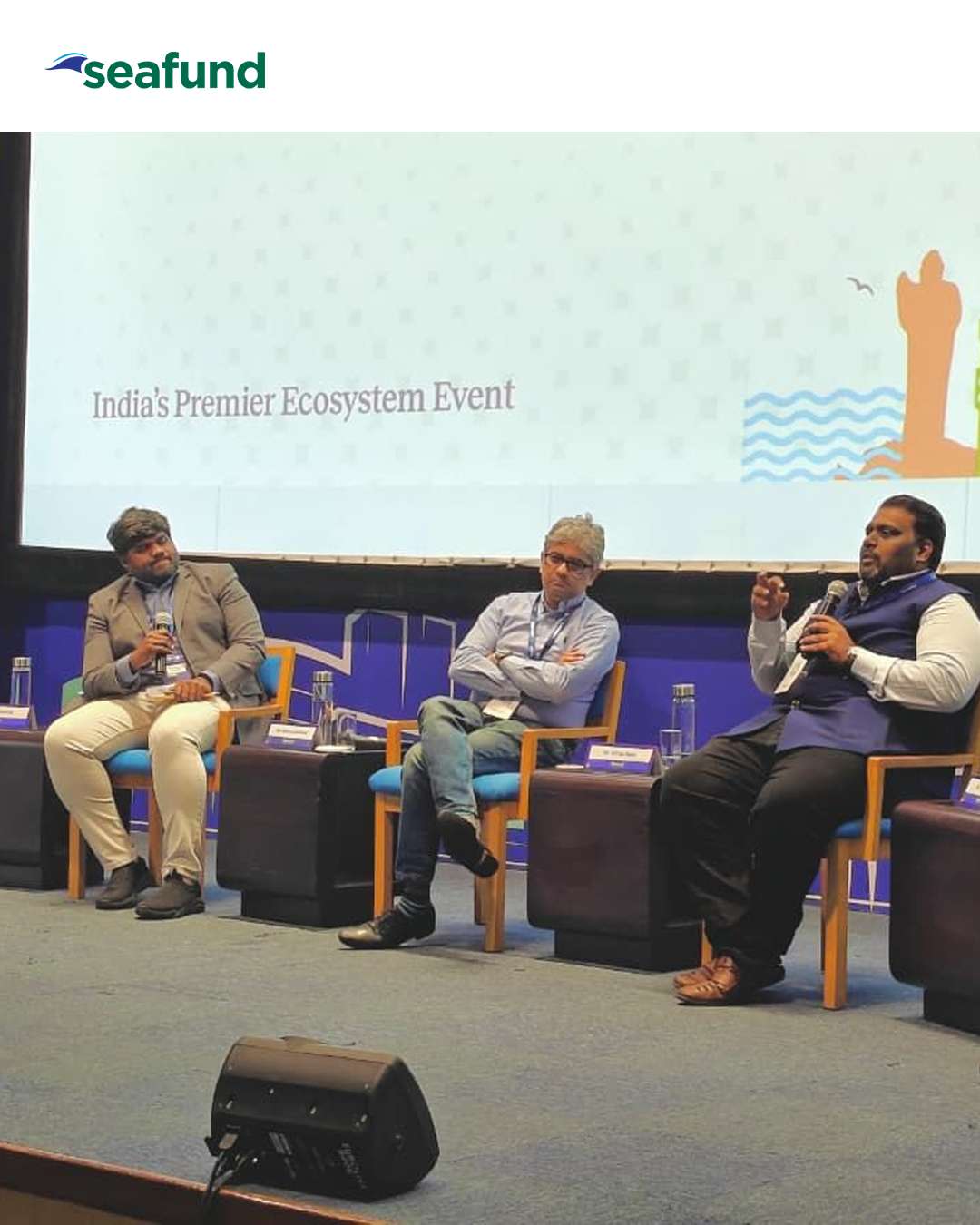
Seafund at I-Connect 2026
Our Co-founder & Managing Partner, Mayuresh Raut spoke on “AI Startups in India: Are We Building Products or Just Prompt-Wrappers?” at ISB I-Venture’s I-Connect 2026, highlighting how AI startups can create defensible products through proprietary data, workflow orchestration, and deep domain expertise.
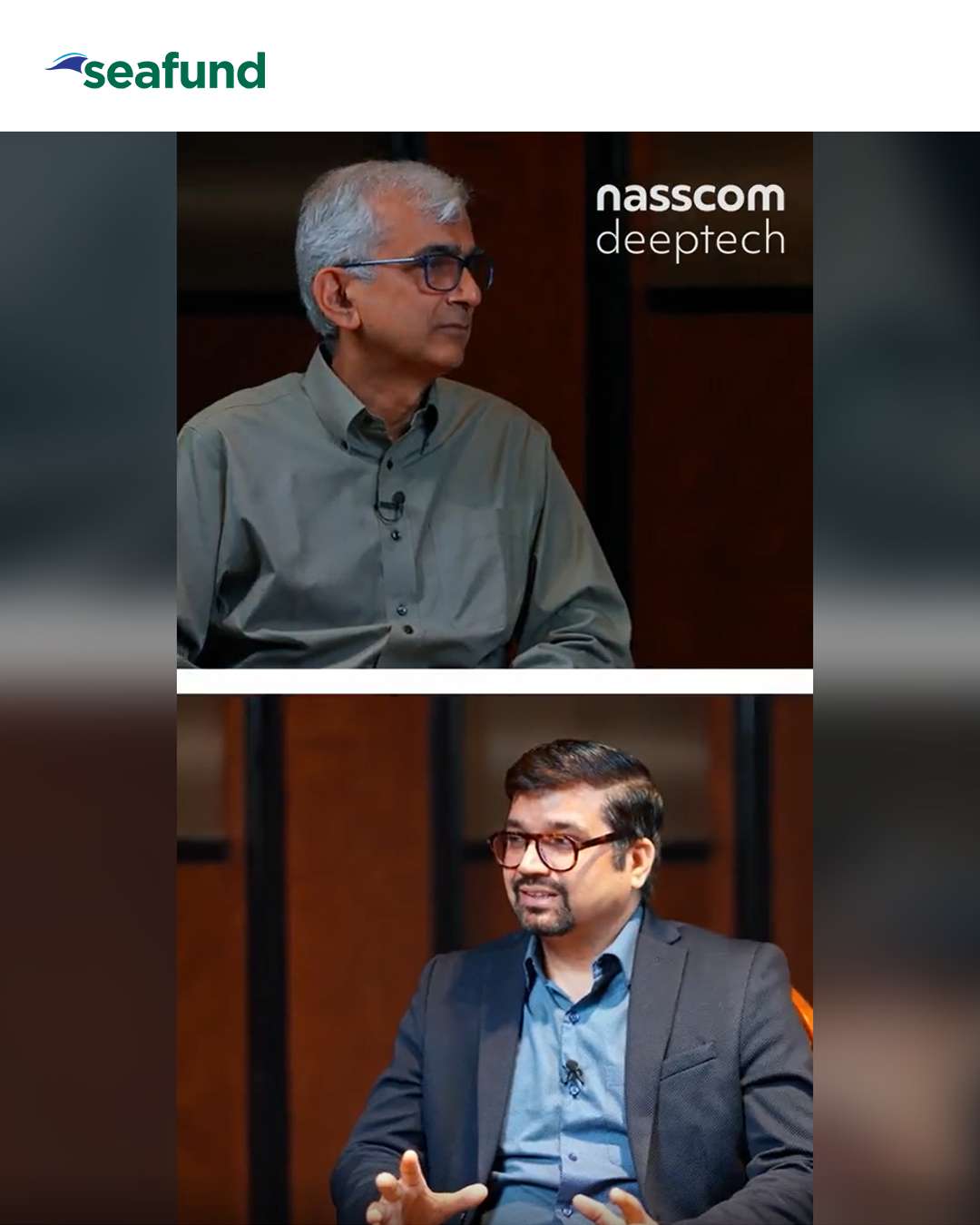
Shaping Autonomous Mobility in India
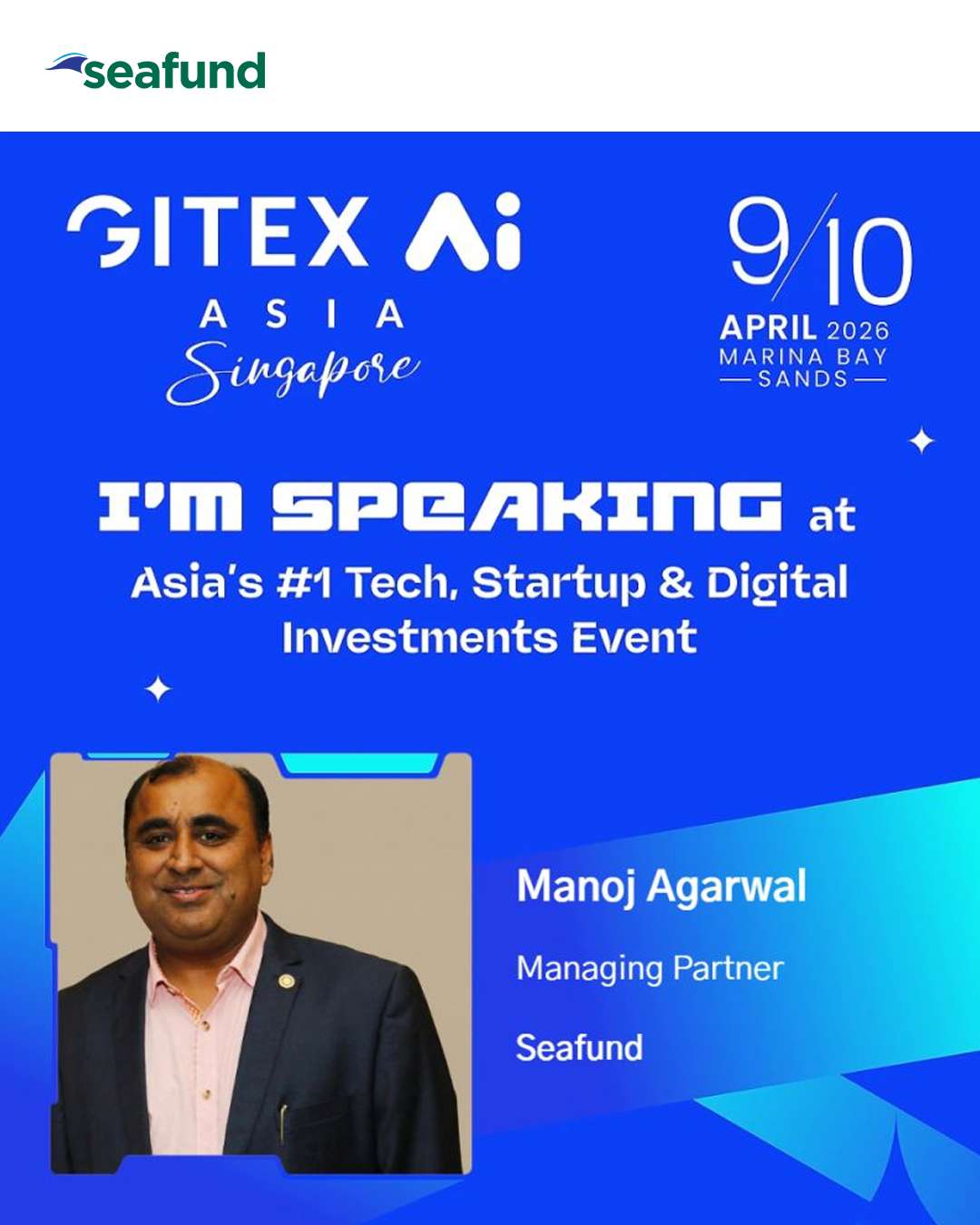
Our General Partner, Narendra Bhandari joined Nasscom Deeptech Conversations to explore the challenges and opportunities of autonomous vehicles in India, focusing on road safety, vehicle communication, and infrastructure-driven innovation.Seafund at GITEX AI ASIA 2026
Our Co-founder & Managing Partner, Manoj Kumar Agarwal spoke at Asia’s largest tech & AI event, sharing insights on the evolving deeptech landscape and fostering collaborations across startups, investors, and industry leaders.
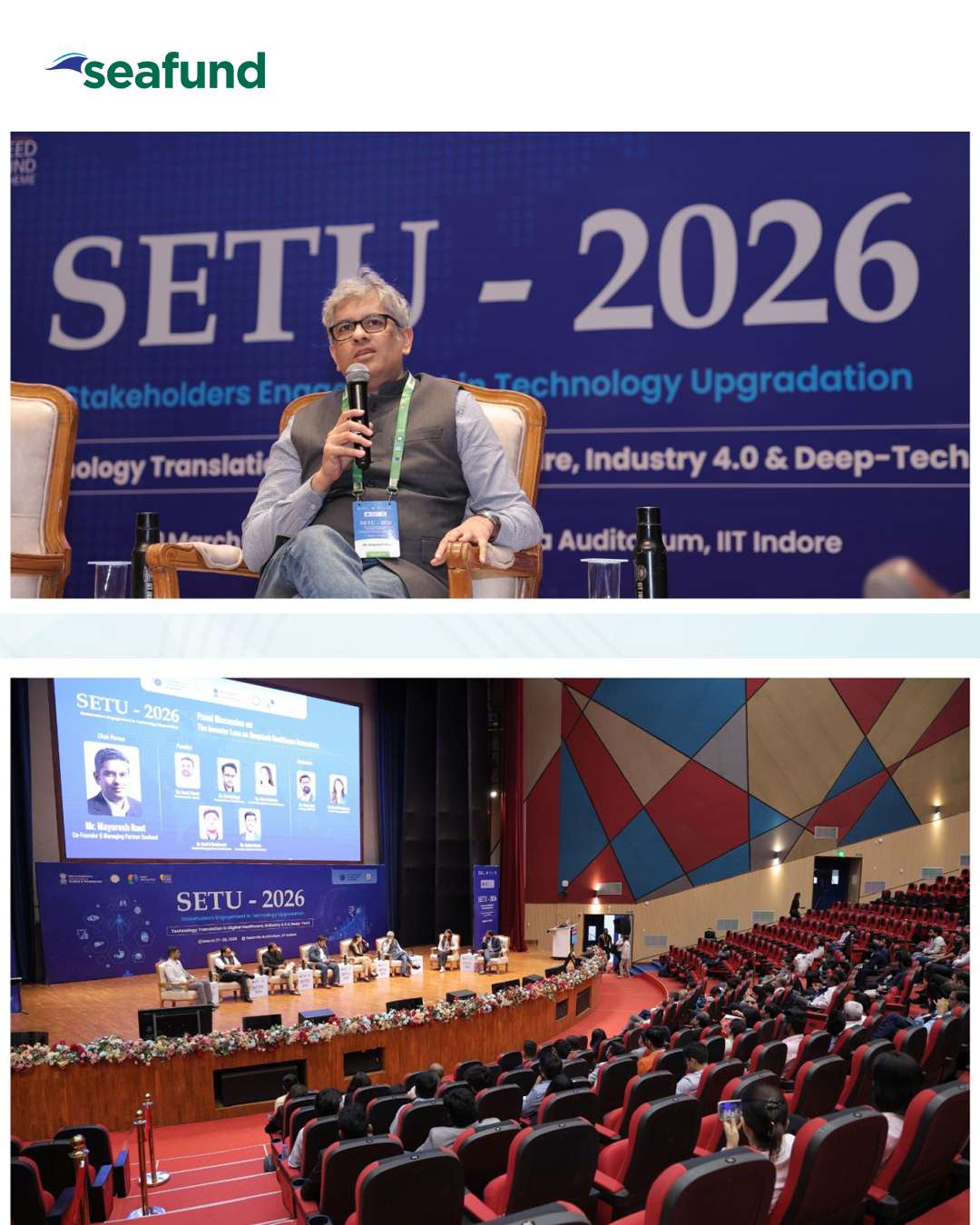
SETU 2026: Investing in Deeptech Healthcare
Mayuresh Raut chaired a panel on “The Investor Lens on Deeptech Healthcare Innovators,” highlighting the importance of regulatory readiness, scalability, and clinically validated solutions for investable healthcare ventures.Honest Conversations on Deeptech Investment
Manoj Kumar Agarwal engaged in an insightful discussion hosted by TMG Group, reflecting on Seafund’s philosophy: deeptech investments should tackle real-world problems, no matter how complex or overlooked.
Deep Dives
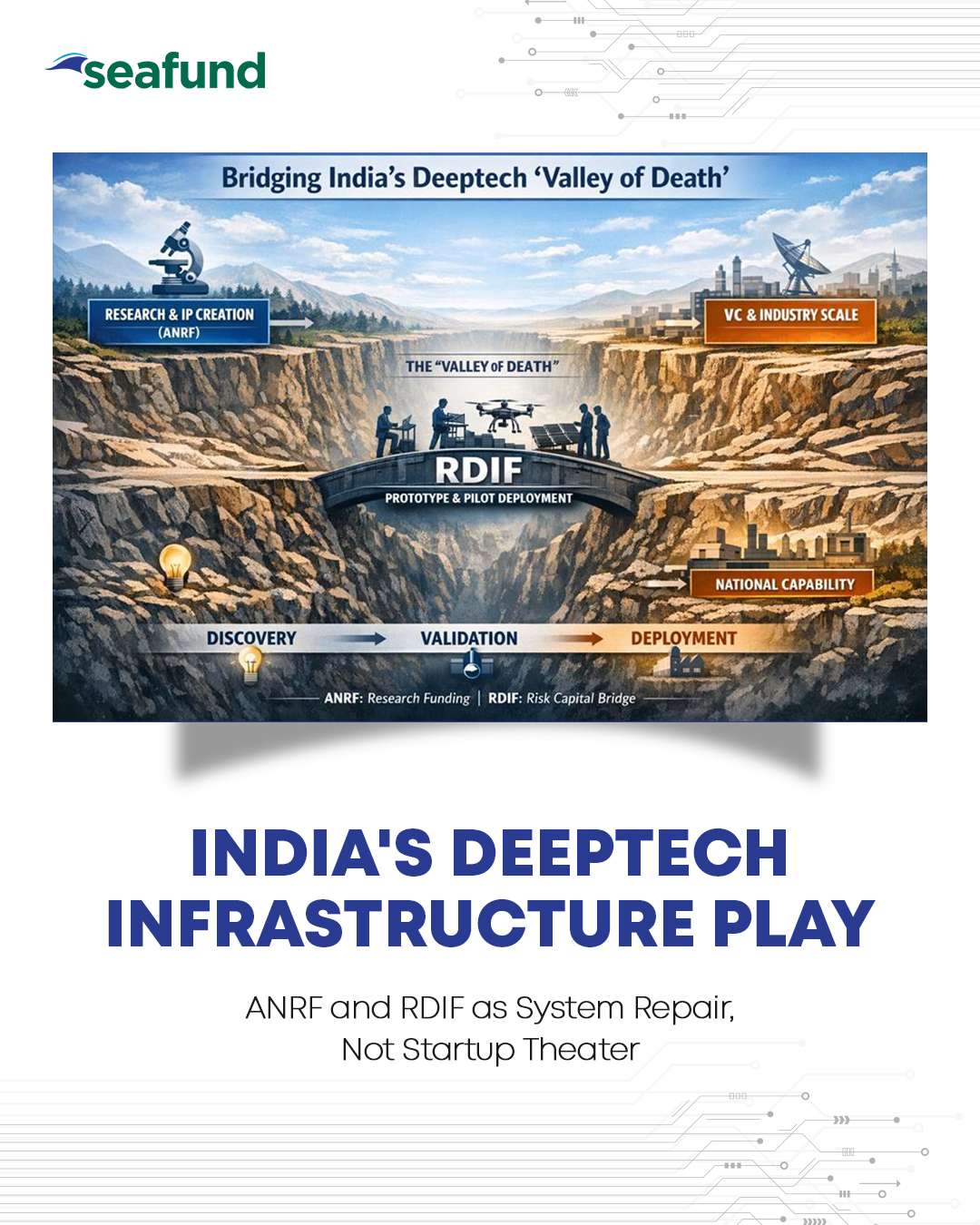
Building Enduring Deeptech in India
ANRF and RDIF are bridging discovery and deployment, providing patient, risk-aware capital for semiconductors, climate tech, healthcare, and advanced manufacturing.
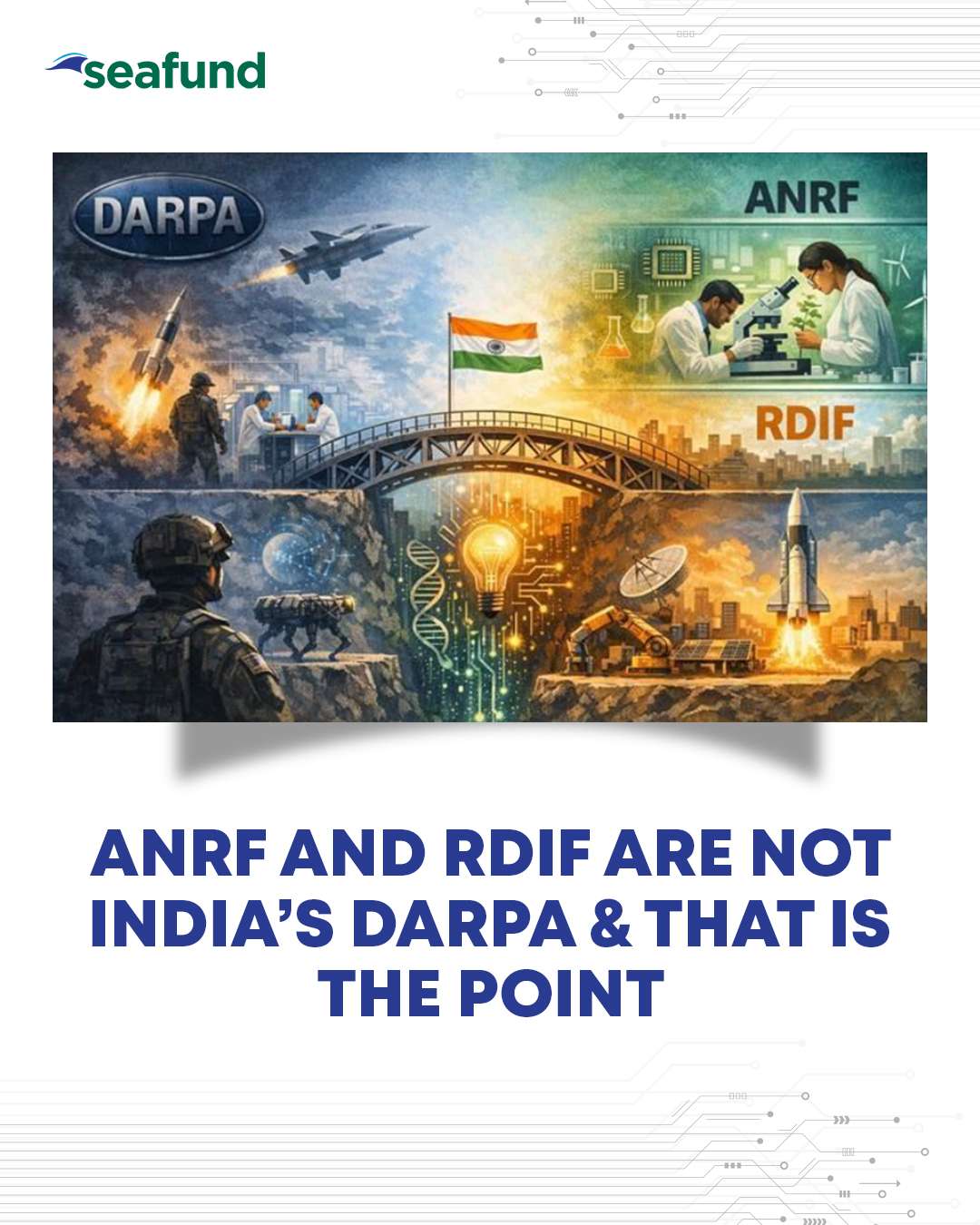
State-Backed Risk Capital: India’s Approach
We unpack why India’s ANRF & RDIF differ from models like DARPA, and how they address the country’s unique innovation challenges.Using Policy Capital as a Lever, Not a Trap
Explore how ANRF & RDIF can strengthen companies while maintaining independence and clearer signals for VC conversations
Designing Capital to Match Technology
Learn how thoughtful capital sequencing, uncertainty-based milestones, and aligned investor expectations preserve technical integrity.India Resets the Deeptech Clock
Policy now aligns with long R&D cycles, real IP creation, and technical uncertainty-giving founders room to build without narrative pressure.
AI in India: Endurance Over Speed
Without proprietary data, workflow ownership, and patient distribution, AI ventures drift toward services; survival depends on compounding systems.
AI Companies Succeed with Leverage, Not Models.
Proprietary data, workflow control, and embedded systems, not model accuracy, determine long-term endurance and impact.
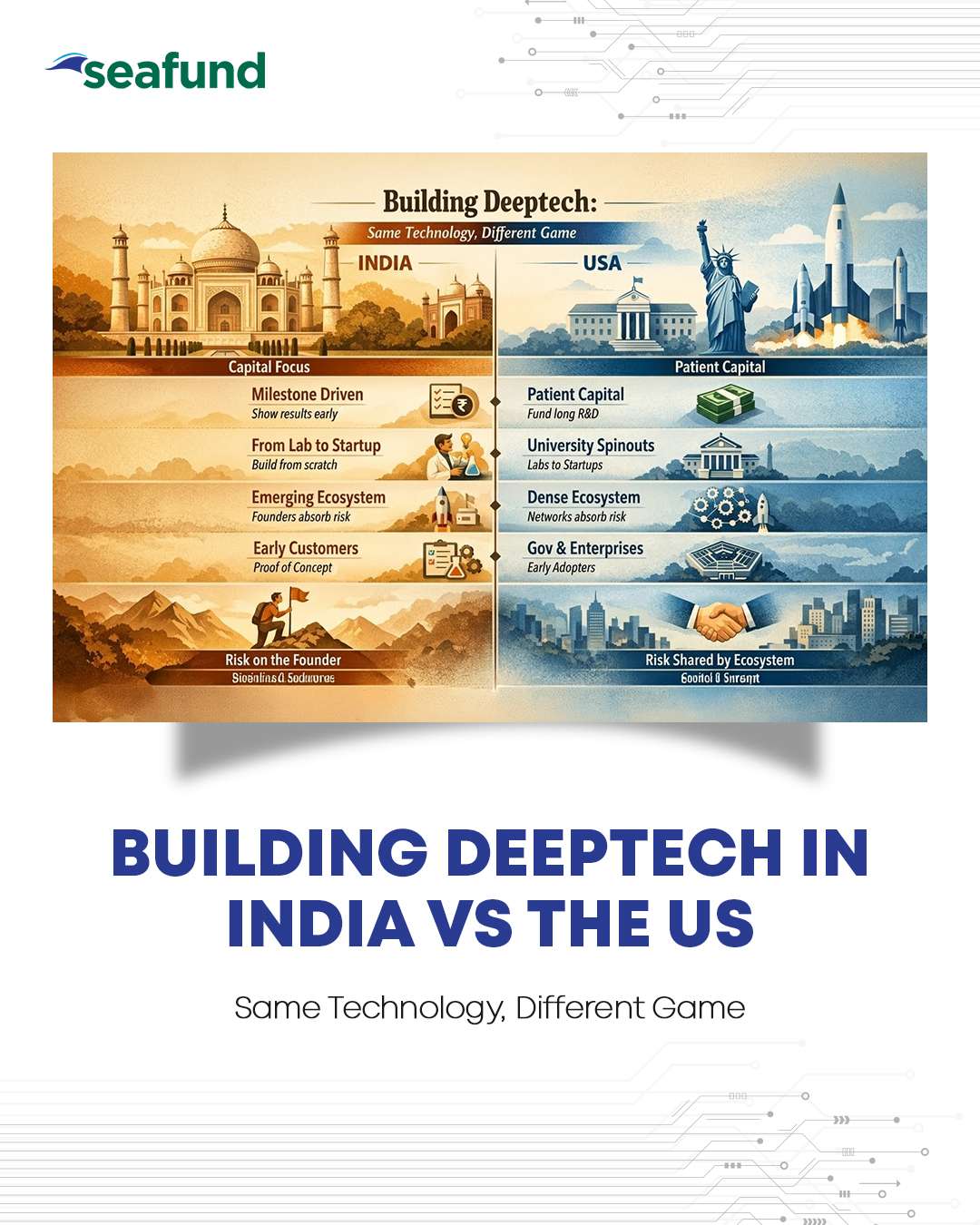
Deeptech Thrives Where Risk is Understood
Indian deeptech journeys are more iterative and capital-efficient, proving resilience as much as scientific breakthroughs.Building Where Resilience is Forged
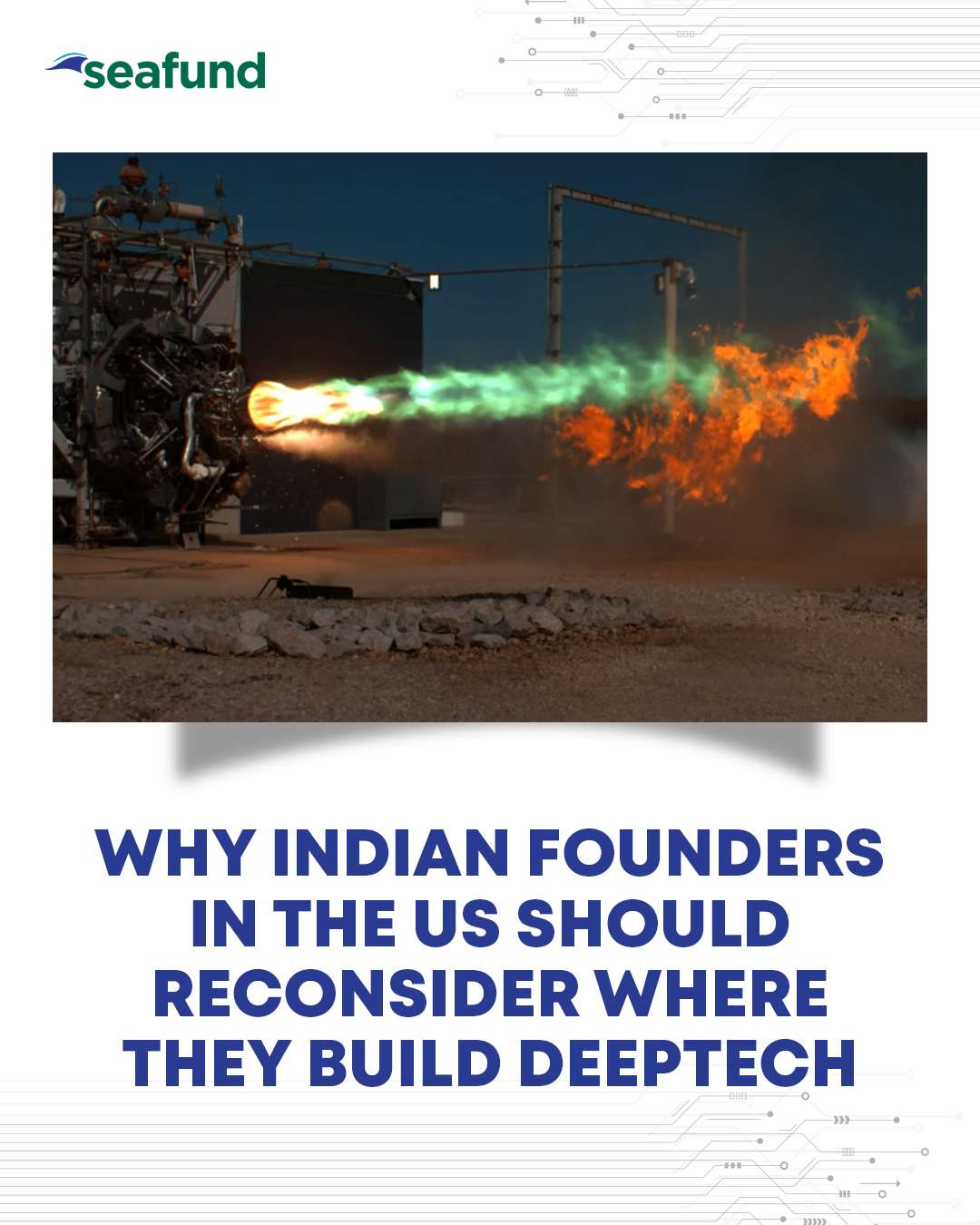
Successful deeptech founders architect across geographies: India for execution, the US for capital and global signaling.
Here’s to the builders, dreamers, and disruptors – may the next quarter bring sharper ideas, bolder breakthroughs, and deeper impact.
Thank you for reading this edition of seafund Newsletter. The future belongs to those who dare to build it, let’s connect and shape that future, side by side.