

The VC Outlook for 2025–2030: Where the Next 100 Unicorns Could Come From
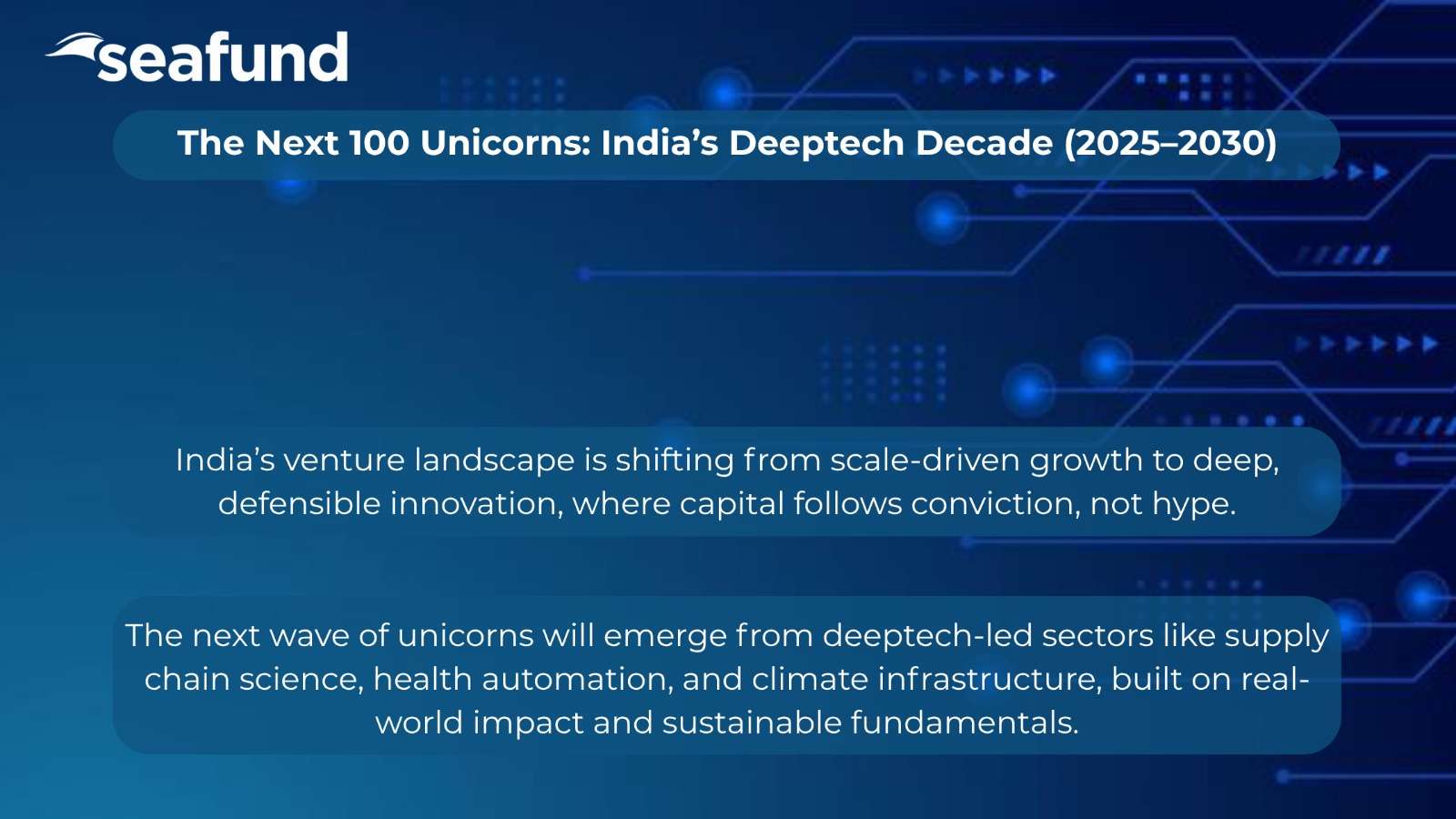
India’s venture capital ecosystem is entering a new phase, one defined not by excess liquidity, but by precision, discipline, and deep technological conviction.
After the volatility of 2022–2024, the market is stabilizing with stronger fundamentals. In 2025 alone, India recorded over $60 billion in PE/VC investments across 1,400+ deals, reflecting resilience despite global headwinds. Read More
But the bigger question remains:
Where will the next 100 unicorns come from by 2030?
The answer lies not in repeating the past, but in understanding where demand, technology, and capital are converging next.
1. Where Demand Growth Is Projected?
India’s next decade of startup growth will be shaped by structural demand shifts, not just digital adoption.
The Rise of Digital & Consumption Infrastructure
India’s digital economy continues to expand at scale. Reports suggest that digital commerce alone is projected to reach $250 billion by 2030, driven by Gen Z consumers, AI integration, and faster logistics. Read More
But beyond consumer internet, demand is becoming more infrastructure-driven:
- Enterprise digitization across MSMEs
- AI-led productivity transformation
- Climate adaptation and energy transition
- Healthcare access for a billion-plus population
This signals a clear shift:
The next wave of unicorns will emerge from solving hard, systemic problems, not just building convenience layers.
Capital Is Becoming More Selective
Unlike the 2021 boom, investors are now backing fewer startups, but with stronger conviction and larger checks. Growth-stage funding is returning, but with a sharper focus on fundamentals. Explore here
This means startups operating in high-demand, high-impact sectors are more likely to attract sustained capital.
2. The Emerging Category Clusters
At Seafund, we believe the next 100 unicorns will not come from a single sector; but from category clusters where science, engineering, and market demand intersect.
A. Supply Chain Science
India’s manufacturing and logistics backbone is undergoing a deep transformation.
From AI-driven procurement platforms to robotics-led warehousing and industrial SaaS, this category is moving beyond efficiency into predictive and autonomous systems.
Why it matters:
- India’s push for Make in India and global supply chain diversification
- Increasing complexity in logistics and procurement
- Demand for real-time optimization and resilience
Unicorn potential:
Startups building deeptech layers over physical infrastructure, not just marketplaces, will define this space.
B. Health Automation
Healthcare in India is transitioning from reactive care to data-driven, preventive, and automated systems.
The convergence of:
- AI diagnostics
- Remote patient monitoring
- Clinical workflow automation
- Bioinformatics
…is creating a new category: health automation platforms.
Why it matters:
- Massive doctor-to-patient ratio gap
- Rising chronic disease burden
- Growing digital health infrastructure
Investors are increasingly looking for startups that combine:
Clinical validation + regulatory readiness + scalable distribution
This is no longer optional; it’s foundational.
C. Climate Infrastructure
Climate is no longer a “sector”, it’s becoming a horizontal layer across industries.
From energy systems and carbon capture to sustainable materials and climate-resilient infrastructure, this space is attracting both policy support and global capital.
Government initiatives and state-level policies are already pushing innovation in:
- Clean energy
- Circular economy
- Sustainable manufacturing
Unicorn potential lies in:
- Scalable infrastructure solutions
- Hardware + software integration
- Long-term, capital-efficient models
This is where deeptech meets nation-building. Know More
3. Investment Implications for Founders and LPs
The next decade will require a different playbook for both founders and investors.
For Founders: Building for Depth, Not Just Scale
The bar has fundamentally shifted.
Today’s investors are prioritizing:
- Unit economics over GMV growth
- Defensibility over speed
- Engineering depth over surface-level innovation
Startups must now answer:
- Does this solve a real, high-value problem?
- Is the technology defensible?
- Can it scale sustainably?
The era of “growth at all costs” is over.
The new mandate is “growth with durability.”
For LPs: Recalibrating Expectations
Limited Partners (LPs) are also adapting to a new reality.
Despite strong fundraising (over $23 billion in 2025), deployment remains cautious, with significant dry powder waiting for the right opportunities. Explore now
What this means:
- Longer investment cycles
- Higher scrutiny on fund performance
- Increased interest in deeptech and frontier innovation
LPs are now looking for:
Funds that can identify category-defining companies early, not just participate in late-stage rounds.
4. Why the Next Decade Will Look Different from the Last
The Indian startup ecosystem is not slowing, it’s maturing.
From Consumer to Core Technology
Earlier waves of unicorns were dominated by:
- E-commerce
- Fintech
- Consumer internet
Today, the landscape is far more diversified:
- AI infrastructure
- Enterprise SaaS
- Logistics
- Deeptech and manufacturing
This diversification signals a deeper, more resilient innovation economy. Read More
From Speed to Sustainability
The journey to IPO is also accelerating. Startups are reaching public markets faster, sometimes within five years, reflecting stronger business models and ecosystem maturity.
But this speed is now backed by:
- Better governance
- Revenue-led growth
- Operational discipline
From Abundance to Discipline
Capital is no longer infinite and that’s a good thing.
The post-2022 reset has created a healthier ecosystem where:
- Valuations are rational
- Capital is more thoughtful
- Founders are more focused
Even as global VC funding surges again driven by sectors like AI; the debate is no longer about how much capital is available, but where it is being deployed.
Conclusion: The Shape of the Next 100 Unicorns
The next 100 unicorns in India will not look like the last 100.
They will be:
- Deeply technical
- Operationally disciplined
- Market-aligned from day one
They will emerge from sectors where:
- Demand is structural
- Technology is defensible
- Impact is measurable
For venture capital firms like Seafund, this is not just an outlook; it’s an investment thesis.
Because the future of venture capital in India will not be built on chasing trends,
but on backing founders who are building the infrastructure of tomorrow.
The Road Ahead: India’s Idea-to-Factory Moment
India is at a rare inflection point where:
- Policy support is strong
- Global supply chains are shifting
- AI is entering industrial systems
- Talent is becoming more hardware-aware
This is creating a new category of companies that sit at the intersection of industrial AI India, robotics, and advanced manufacturing.
The winners will not just design products; they will own the journey from idea to factory.
At Seafund, we believe this is where India builds its next generation of global industrial leaders.
And for founders willing to take the harder path, this is one of the most rewarding ones.
FAQs
1. Which sectors will create the next 100 unicorns in India by 2030?
The next wave of unicorns is expected to emerge from deeptech-driven sectors such as supply chain technology, health automation, climate infrastructure, AI, and enterprise SaaS.
2. What are venture capital investors looking for in startups today?
Investors are prioritizing strong unit economics, defensible technology, scalable business models, and real-world problem-solving over rapid but unsustainable growth.
3. How is India’s VC ecosystem evolving post-2022? manufacturing startups?
India’s VC ecosystem is shifting from high-volume funding to a more disciplined approach focused on fewer, high-conviction investments with long-term value creation.
4. Why is deeptech becoming important for venture capital in India?
Deeptech is gaining importance because it addresses complex, large-scale challenges in sectors like healthcare, climate, and infrastructure, offering long-term defensibility and impact.
5. What makes a startup attractive to deeptech-focused VCs like Seafund?
Startups that combine strong engineering depth, validated use cases, regulatory readiness, and the ability to scale sustainably are most attractive to deeptech investors.
Table of Content
- 1. Where Demand Growth Is Projected
- 2. The Emerging Category Clusters
- 3. Investment Implications for Founders and LPs
- 4. Why the Next Decade Will Look Different from the Last
- 5. Conclusion: The Shape of the Next 100 Unicorns
- 6. FAQ